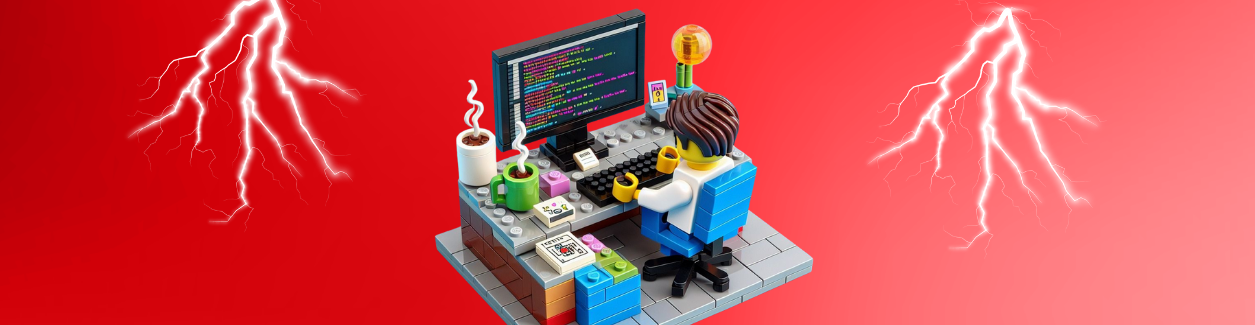
When UX and development sit at the same table, there is no need for translation. Designs are fine-tuned in real time, and changes go live as soon as they make sense. We are showing that even a large media brand can change gradually and efficiently, without users' experience shifting under their feet.
Collaboration that makes sense
One of the most visited Czech news websites, Blesk.cz, is going through a transformation. This is not a one-off event but a long-term, gradual process. Instead of a classic redesign, we chose an approach that speeds up technological development while responding better to changing reader needs.
We are updating the website piece by piece, from the homepage through sections to individual components. Each change is rolled out when it makes sense in terms of functionality, user impact and editorial priorities.
The product manager, designer and front-end developer work in close contact. Thanks to this, designs are feasible from the start and match both technical possibilities and the needs of the editorial team. Designer Václav Jelínek and developer Jan Pikl have worked together since the first draft of the feature. Once the editorial team approves a design, development can start without delay. The developer knows exactly what to do and why, because they were present throughout the process. This significantly shortens the time between idea and realisation.
Fast releases = instant feedback
By splitting development into individual steps, we can introduce changes gradually and monitor their impact immediately. Instead of large releases, we work with smaller, controlled iterations. This gives us room to test even prototypes or experiments that may never reach production but help define the direction of further development more precisely.
One concrete output is the new dynamic navigation on Blesk. “Dynamic navigation is used to categorise and browse content not by sections but by topics. Moreover, it reflects how topics are currently moving society and how they are mirrored in the medium and in its target group of readers,” explains product manager Ondřej Javornický.
An agile approach requires seniority
This agile approach works for us thanks to an experienced team that has perspective, understands the context and has room to decide. A typical example is Jan Pikl, who, in addition to a deep knowledge of React, can plan, get involved in designs and think in a broader context. He understands the impact on performance, SEO and long-term sustainability. He has decision-making authority and takes ownership of the project. It is this combination of independence, technical confidence and responsibility that is key to making sure development flows and designs do not remain only on paper.
Technology foundation
We build the front end on TypeScript and React, and we handle styling with CSS Modules. We design components in Figma with a unified naming system, such as ArticleTeaser, LiveLabel or SectionHeader. Every new feature goes through visual and functional validation in Storybook, and we review code in GitHub. We roll out gradually via feature flags, so changes can first be tested in live use on part of the audience. This is how the quick news items in the top bar were created, which appear instantly without the need for a reload.
At the same time, we devote a large part of our capacity to the technology foundation, connections to other systems, sustainability and code reusability. We build things that users don't directly see, but that form the basis for further development.
A process that does not end with a release
We are not doing a one-off facelift, but building a system that can adapt. We test every change directly in live use, evaluate it and keep tuning it.
This confirms that when development and design truly talk to each other, even big things can be changed gradually, thoughtfully and with real impact.

Comments