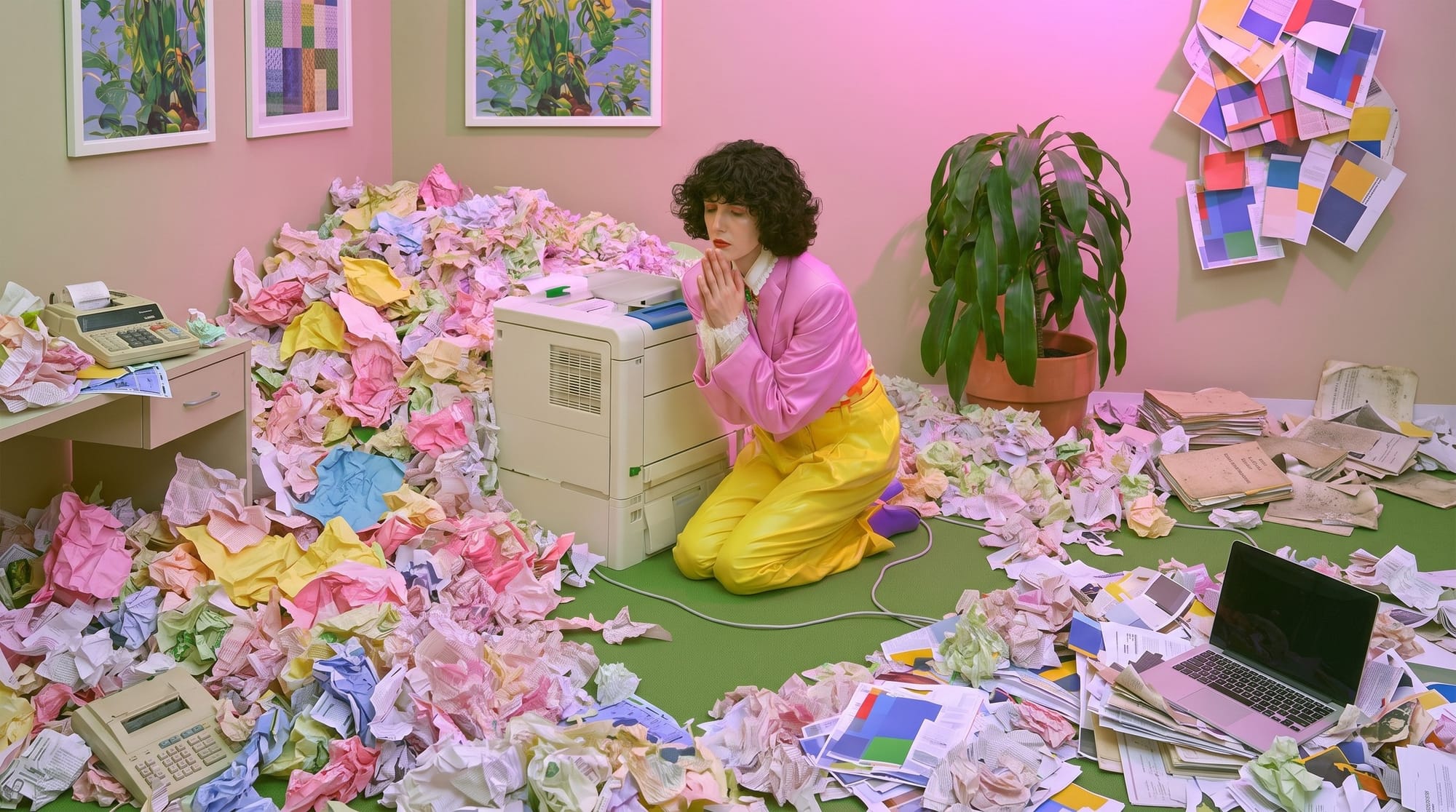
A clip from a podcast or an interview now routinely collects more views than the full episode it came from. Cutting other people's content has become a standalone lever of reach, and whole teams now run it and pay for it. The clearest case came in August from China.
The animated film Niu Lai began as a family project of Xin Yumeng and Sun Lifang, who according to available reports are mother and son, and who handled the script, direction, production and dubbing. After its premiere on 5 August it earned 7,700 yuan, about $1,070, in its first ten days and sold just under 300 tickets.
Then viewers began cutting scenes from the film, mocking its clumsy animation, and sharing them online. Memes sparked interest, and people went back to cinemas. By 20 August the film had taken more than four million dollars, according to Reuters, and in Chinese daily rankings it came in just behind Spider-Man: Brand New Day, whose budget is put at $225 million. “Other than envying how much money this piece of junk has made, I have no complaints,” one blogger wrote on Weibo, as cited by Reuters.
Online, it is often said that the film cost a thousand dollars. But that sum describes its opening box office. According to Reuters, the real budget was on the order of thousands of dollars, and the film took five years to make.
The popular explanation points to the charm of imperfect animation and the sincere effort of two amateurs. Producer Arjun RK of Nas Company on LinkedIn credits the turnaround to a clipping strategy and says that “clipping has been responsible for a lot of successes since 2025 in Films, Music and even Campaigns.” Reporting shows, however, that the clips for Niu Lai arose organically, from viewers who had originally been mocking the film, and not from a campaign run by creators. Cartoon Brew describes its look as “that only a mother, or film buff sick to death of samey-looking, AI slop, could love.” Handmade imperfection is part of the appeal that the clips spread.
Paid clipping has rate cards and contracted teams
Where Niu Lai was a matter of chance, the industry is running it as a business. Digiday describes clipping as turning a long video or stream into short cuts, which a third party spreads across platforms for a fee. Clipping, a company founded in 2025 by Anthony Fujiwara, reportedly took in $7.7 million over ten months according to Bloomberg and had more than 20,000 contracted clippers, Digiday reports. According to Forbes, prices range from $100 to $1,000 per million views. MrBeast launched his own clipping company, Vyro, at the end of 2025.
The model is moving from creators to brands and campaigns. On the platform Whop, Los Angeles mayoral candidate Spencer Pratt paid for posts with clips from debates, aimed at pages with a mostly American audience. “Clips used to be the byproduct, and now they're the product,” consultant Adam Rosenberg tells Digiday. Aida Andersson, commercial director at Chartis, adds that “discovery is algorithm driven, it's passive, so that shift fundamentally changes how campaigns need to show up.” Arjun RK advises brands to set aside a three-person team for clips: a producer and two editors.
The model has a downside too. According to Digiday, clips flood algorithms and create artificial popularity, out-of-context excerpts distort the creator's original message, and paid distribution runs into likeness rights and the duty to label advertising, which the FTC monitors in the US.
Clipping is heading into Europe along the same platforms: Instagram, TikTok and X. From the point of view of advertising labelling, paid amplification of reach is the same case as an influencer collaboration and must be marked as a commercial message. How transparency will apply to a network of anonymous clippers remains open in Europe.
Whether reach arises by chance, as with the Chinese cartoon, or is bought for around a thousand dollars per million views, it is clipping that now drives the distribution of content.



Comments