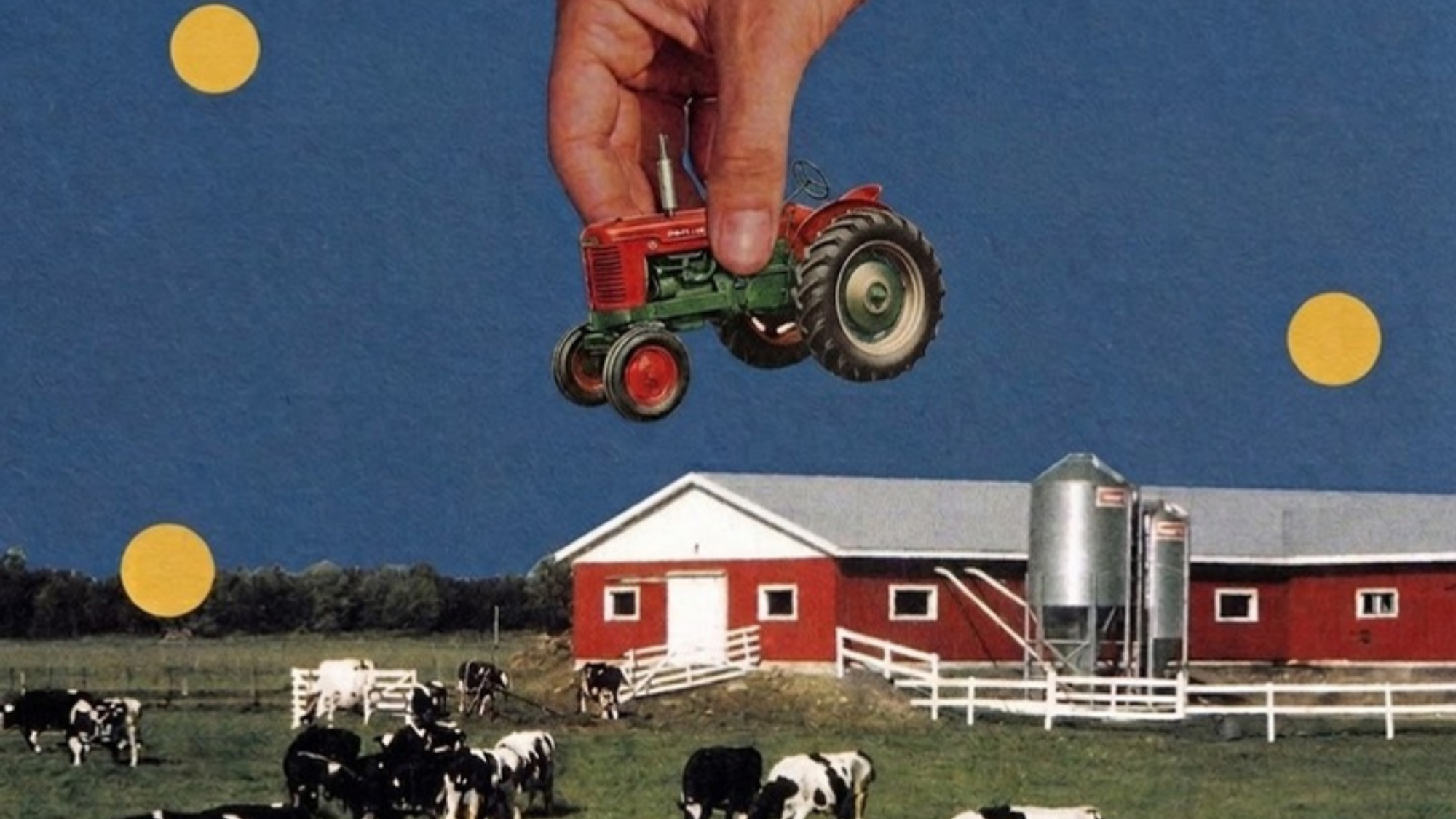
“Everyone is talking about the rise of creators. I'm watching the rise of something else.” That is how Colin McRae, an executive producer and founder of production companies in the creator economy, opened his LinkedIn post.
The something else he means is “the producers, operators, and builders who will help turn creators into the next generation of entertainment companies”. In his view, the main story of the creator economy is what is being built around creators: the companies, capital and craft that turn them into an entertainment business.
Capital is buying up channels, streaming services are licensing their shows and consultancies are buying the agencies that serve creators.
Private equity buys YouTube channels
On 14 July 2026, Content Partners and Ed Simpson launched Wonderloom Media, a platform that acquires and runs content businesses built on YouTube. Its first purchase was the true crime channel Dr. Insanity, with more than 5 million subscribers and over 1.3 billion views.
Simpson, formerly Chief Strategy Officer at Wheelhouse, summed it up in one line: “YouTube is no longer the disruptor. It has become the incumbent.”
Consolidation is accelerating. According to the 2025 H1 Creator Economy M&A report from the advisory firm Quartermast Advisors, the creator economy saw 52 mergers and acquisitions in the first half of 2025, against 30 in the same period of 2024. That is an increase of 73%.
Software was the strongest category at 27%, followed by media companies at 19%, with agencies and creator representation firms at 14% each. Among the largest moves was Later's $250 million takeover of the affiliate platform Mavely.
Netflix takes creators' shows into its catalogue
While capital buys up channels, streaming services license their shows. Over the past year, Netflix has taken on the children's show Ms. Rachel from the Songs for Littles channel, the reality series Inside from the British collective The Sidemen and a live version of the dating show Pop the Balloon by Arlette Amuli and Bolia Matundu.
This is where creators hit a ceiling. According to Digiday, which McRae links to in his post, only the top 1% of creators own their IP. Jo Wong, Chief Revenue Officer of the platform POP.STORE, points out in the same piece that Addison Rae's show is a partnership with Netflix, not an asset owned by the creator.
Jonathan Chanti, CEO and co-founder of Reign Maker Group, talks about a “race to the bottom before we see the next generation of breakout creator entertainment”. Licensing brings reach. The value of ownership stays with the platform and with the company that makes the show.
Accenture buys the European agency Whalar
Consolidation is so far mostly North American. According to Quartermast, 79% of deals in the first half of 2025 involved North American companies, and the share of international targets fell to 21% from 40% a year earlier.
Whalar is the European exception. On 8 June 2026 Accenture announced that it is taking over the agency under its Accenture Song division. Whalar has more than 170 people in the United States, the United Kingdom, Ireland, Germany and Spain. The companies did not disclose the value of the transaction.
Neil Waller, co-founder of Whalar Group, described it as a move where “Accenture Song operates at a level of scale and ambition that is truly unique”. Ndidi Oteh, CEO of Accenture Song, framed the acquisition with the words “Social is where brands are discovered, where modern commerce is happening and where consumer habits tell us what products and services are going to win next.”
European creator economy is thus handing one of its largest operators to a global consultancy.
The craft that did not get cheaper
In April 2023, Goldman Sachs estimated that the creator economy would grow from $250 billion to roughly $480 billion by 2027, with 50 million creators and growth of 10 to 20% a year. Money is flowing into the sector.
But McRae points to what has not become cheaper as a result. “AI made it easier to make content. Platforms made it easier to reach people. Creators made it easier to build an audience. None of that made it easier to create something people actually care about. Or come back for.”
The producer's role is in his view expanding towards a position where “they'll have to think like both a producer and a studio executive”. He recalls Lucas. “George Lucas didn't just make a film. He built a universe. Today, that universe might start on YouTube instead of in a movie theatre.”
He concludes that the shortage will not be in creators. “I don't think the shortage will be creators. I think it'll be the people who know how to help them build something bigger.”
Comments