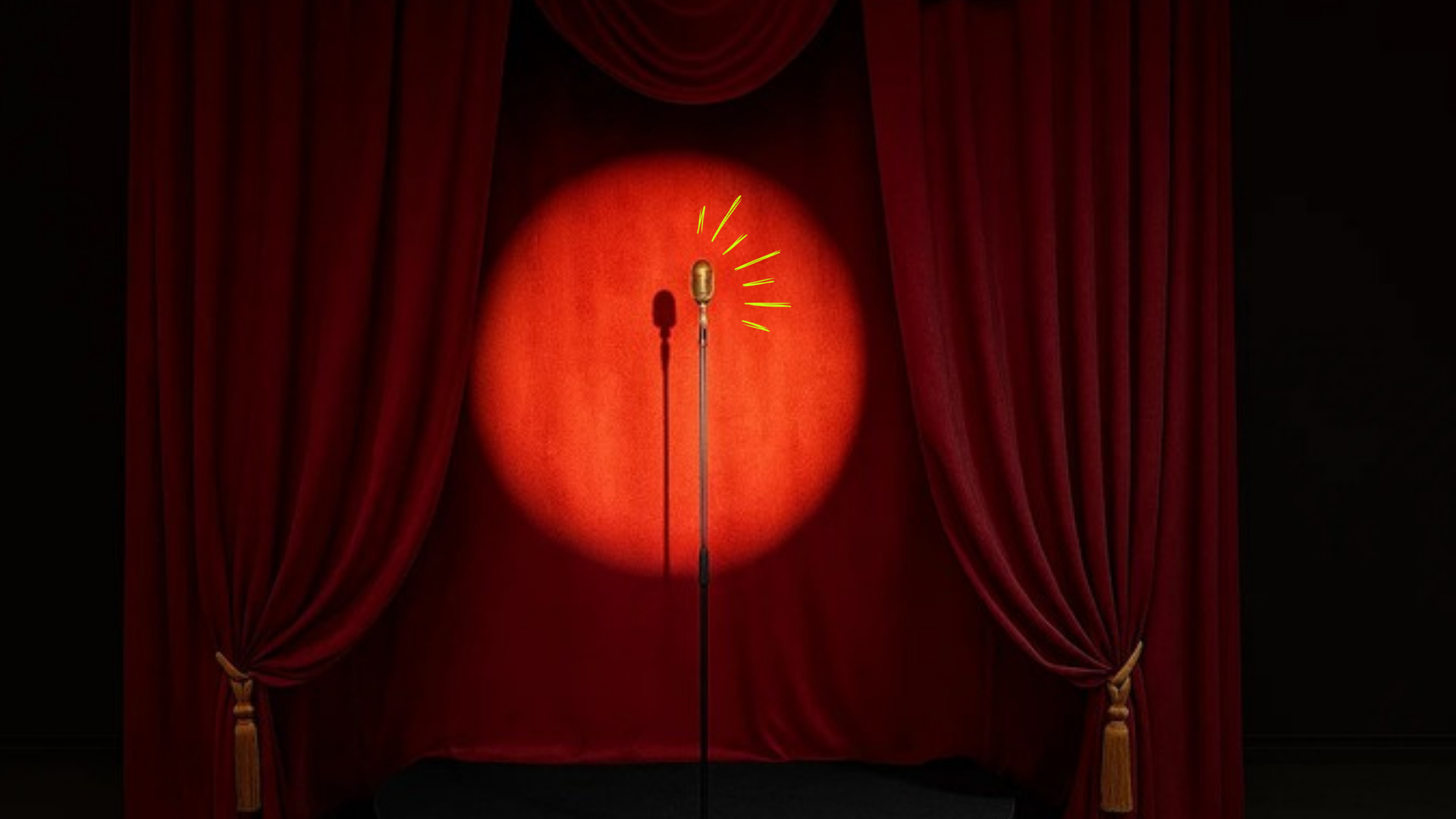
Until recently, podcasts mostly filled walks and car journeys. Today they are becoming cultural events. While Opravdové zločiny sold out Prague’s O2 Arena, the British podcast The Diary of a CEO is heading to cinemas, and other creators are running fan tours. Podcasts are slowly leaving headphones behind and turning into an experience people want to share.
Statistics show that podcasts have become a firm part of our day. According to research (MediaGuru 2024), Czechs most often listen at home while relaxing or before bed (49%), during household chores such as cleaning or cooking (41%), while travelling by public transport, by car or on foot (33%), and only a smaller share during sport (6%). A podcast therefore accompanies moments when it is hard to give a screen our attention. But this is gradually changing, and people clearly have no problem spending even evening prime time with a podcast.
The podcast Opravdové zločiny transformed within a few years from an unobtrusive true crime format into one of the most prominent Czech brands. Last year it took a step that would have sounded absurd just a few years ago: it filled Prague’s O2 Arena. The special show, titled Jsme Zločinožrouti, offered audiences dramatic reconstructions, visual projections and guests from among criminal investigators.
Thousands of people in the audience
A format that began as an audio story for individuals became a live event with thousands of people in the audience. It was so successful that this autumn the authors are building on it and running a tour of the same name across twelve Czech cities.
Similar transformations of podcasts are not rare. One of the most prominent projects is the Letní Podcastová Scéna at Trojský pivovar, where during summer 2025 authors of popular Czech podcasts met, from Hlasy zločinu through Šťastný podcast to Přepište dějiny. During the evenings the hosts shared behind-the-scenes moments, and listeners could be part of the recording process.
A similar initiative is the Podcastový maraton. It is a one-day festival in Ostrava where six Czech podcasts performed live under one roof, with debates, in real time and with audience interaction. Fans could listen to, for example, Chumelenice, Hlasy zločinu, Pastoral Brothers, Vyhonit ďábla, Michaelův Mashup and others, while being part of the live atmosphere.
Podcasts also work in cinemas, not just at festivals. A case in point is the global phenomenon The Diary of a CEO by entrepreneur and host Steven Bartlett. His episode with musician Louis Tomlinson had its world premiere on 8 October on the big screen, as a one-night-only premiere in six Regal cinemas in the USA and six Cineworld screens in Britain and Ireland. It was an opportunity to see the episode a day before it went online. This was the second time DOACEO has done this. You can read about how the first one went here.
Physical space works
Bartlett said of the show that most people today consume content alone, in isolation, with only a phone in hand, and that there is a better and more valuable way to experience a podcast together. In both cases the principle is the same: breaking down the barrier between creator and listener. A podcast shifts from an intimate format into a public experience. As with other formats, people want to share emotions and see creators live.
This development also confirms a transformation of the whole media culture. While television and radio try to catch up with digital content, podcasts are moving in the opposite direction: from the digital back into physical space, where experience-led marketing dominates.

Comments