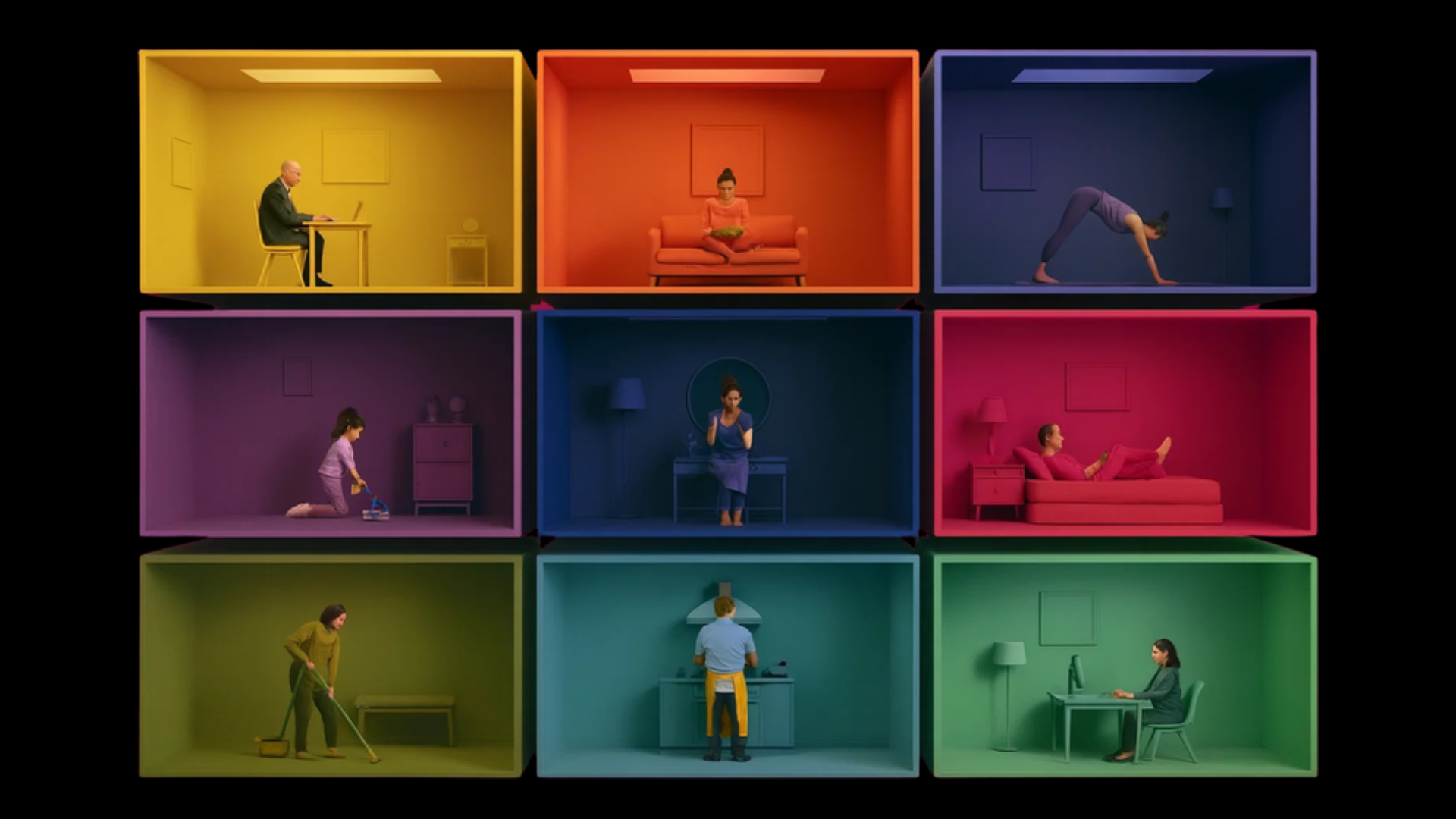
Being single is no longer taboo, but a new social default. A growing number of people who live alone is changing how we spend our time, where we look for company and whom we trust. And as relationships move into the digital space, media, marketing and the whole creator economy are changing with them.
The Economist pointed out this November that in developed countries the number of people aged 25 to 34 who live alone is rising quickly. In the US, 38.5 million people live alone, which is 29% of households. In Japan, single-person households account for 34%, a historic high. The European trend is similar. The number of single-person households without children in the EU rose by 16.9% between 2015 and 2024, and in 2024 there were already more than 75 million of them. This is one of the biggest cultural shifts of our time.
Social networks have changed
They are no longer a space where we maintain relationships with friends. They have become infrastructure: an environment where we discover who we are, whom we trust and with whom we spend our time, even if only in digital form. The concept of parasocial relationships best explains this: a one-sided sense of closeness that we develop towards creators, influencers or public figures. A 2020 meta-analysis by Tukachinsky, Walter & Saucier, summarising 60 years of research, shows that parasocial relationships are now the basic mechanism of digital culture. People follow creators not only for information, but for orientation, emotion and a sense that they belong somewhere.
What does it do to our dating, mental health and expectations of relationships?
A 2024 study by Kristin Vahur titled Voluntary Singlehood? Investigating the Relationship between Social Media Consumption, Cynical Views, and Dating Motivation shows that time spent on social networks alone does not reduce the motivation to date. It does, however, increase cynicism towards the opposite sex, and it is cynicism that weakens the motivation to date. Another study, a meta-study by Vázquez et al. from 2025, offers a further interesting picture. For younger adults, intensive social media use is more often linked to higher loneliness, while for older people it may have a protective effect and reduce the feeling of isolation. There is therefore no universal impact of social networks. It depends on who we are and how we use them.
The rise of singlehood is fundamentally changing how people relate to content
And this is where we get to the creator economy. People living alone do not look for information alone in content. They look for companionship, inspiration, rituals, company and orientation. The Economist says that singles invest more in themselves, travel, careers and content. There is no single global statistic, but qualitative and quantitative studies show that singles form a specific media segment for which content is a natural companion. Research on parasocial relationships shows that audiences form the strongest bonds with creators who are consistent, personal, identifiable and authentic. This explains why podcasts, video essays, personal newsletters and micro-communities are growing despite the fragmentation of attention. They offer something traditional media cannot: a sense of relationship, companionship and someone to keep you company.
Singlehood does not mean loneliness
It is a new way of life. People living alone do not seek less company. They simply seek it differently and elsewhere: through creators, communities, content and digital connection. One of the biggest demographic changes of our time is thus directly linked to the growth of the creator economy. Not because of algorithms, but because people around the world are adapting their social rituals to a new era. And content is becoming one of the most important ways not to be alone, even when we live alone.




Comments