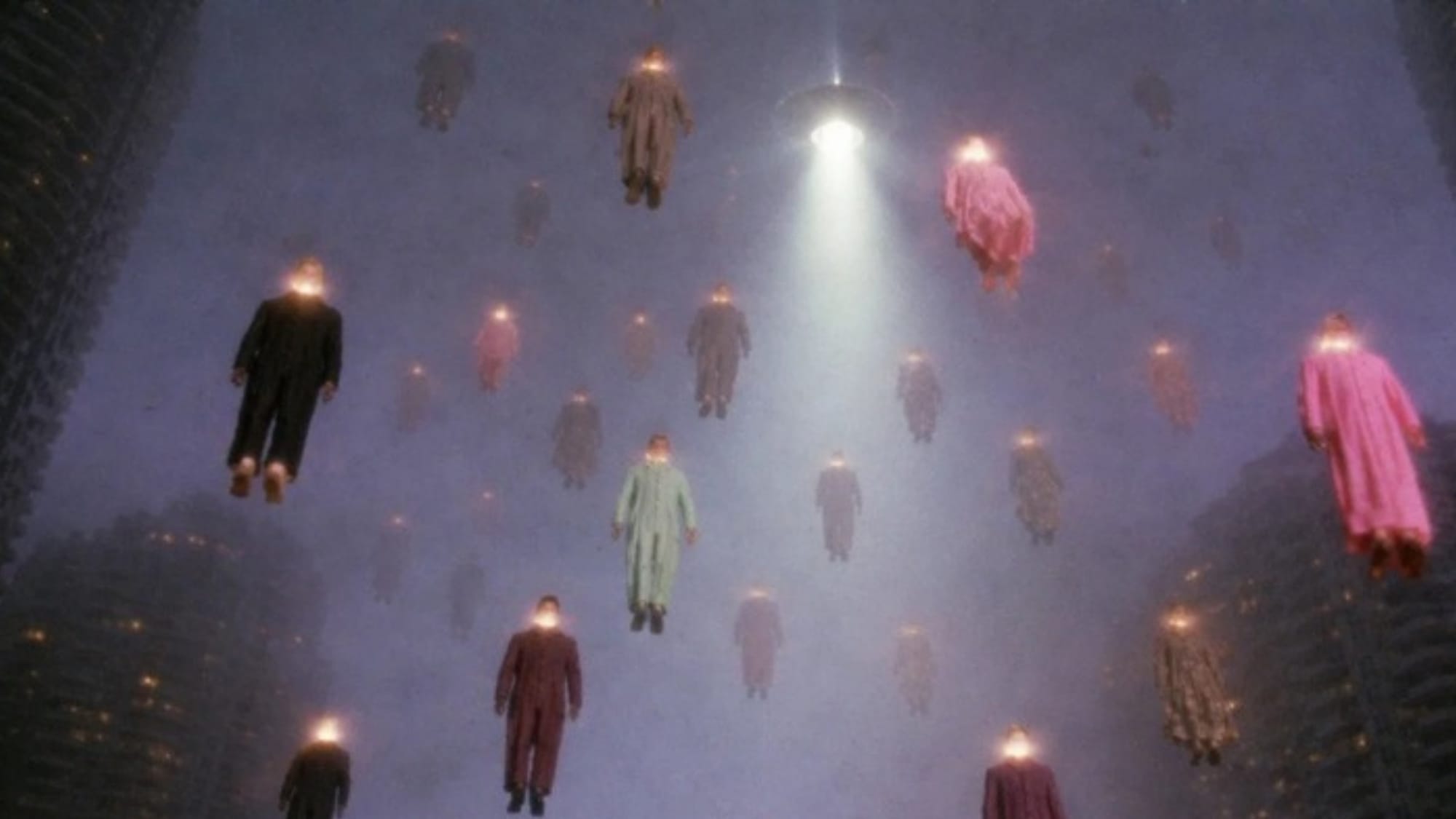
Mark Fischbach, known to his audience as the YouTube games creator Markiplier, paid for his own feature-length horror film out of the money he earned making videos.
Iron Lung opened with $17.8 million from 3,015 US cinemas and finished second on the weekend chart. The film cost about $3 million, and Fischbach financed and distributed it himself. “It's kind of a hero moment to showcase indie filmmaking is possible,” he said in response to the numbers, according to Variety.
Iron Lung has so far earned about $50 million worldwide, of which roughly $40.9 million came from the US and Canadian box office. The film is an adaptation of the horror video game of the same name, and it premiered in US cinemas on 30 January 2026.
Three YouTube creators in cinemas within one half-year
Fischbach is not a unique case. In recent months, two other creators who started on YouTube have taken the same path.
Twenty-year-old Kane Parsons directed the horror film Backrooms for A24, based on his own web series about endless empty rooms, which grew out of internet forums. The film passed $212 million worldwide by 8 June 2026, becoming the highest-grossing title in A24's history, overtaking the studio's previous best, Marty Supreme, which made $191 million over its entire run.
Of that, $135 million came from North America and $77 million from another 57 markets. A24 and Chernin Entertainment co-financed the film with around $10 million. Parsons became the youngest director with a film at number one at the US box office.
Twenty-six-year-old Curry Barker made the horror film Obsession for $750,000. Focus Features bought it for more than $15 million, and the film had earned $224.7 million worldwide by 7 June 2026, of which $152.1 million came from domestic cinemas and $72.6 million from other markets. For Focus Features, this is the highest-grossing film in the studio's history.
All three films share the same structure. A genre horror with a low budget, an original premise that the creator tested on YouTube or in short form, and an audience that does not have to be found first. Variety summed up the whole phenomenon in a piece titled “Why YouTubers Are Turning Hollywood Upside Down”.
What creators bring to studios
Hollywood describes this logic itself. “The YouTube generation has finally come of age. They grew up creating their own content with no money and just by being as creative as possible,” said James Wan, according to Variety. He is a co-producer at Atomic Monster. Jason Blum, head of Blumhouse-Atomic Monster, added that “these creators spend years making things for a live audience on the biggest platform in the world, and learning in real time what works.”
Fischbach frames it himself as years of training. “I've been practising for 14 years. I made a video almost every day and have probably made over 6,000 videos at this point,” he said, according to Variety. In this way, creators enter their first film with their own audience, a premise tested on the platform and years of experience in what audiences respond to on screen.
YouTube's role in that equation is meanwhile passive. “We are not a traditional studio. We don't gatekeep, we don't fund and we don't own the IP, so they're in the driver's seat and that's freeing for filmmakers,” said Kim Larson, who leads creator and gaming at YouTube, according to Variety. The platform provides reach and a school of craft, while money and rights stay with the creator or with the studio that buys the film.
What it means for Europe and the Czech Republic
Obsession is playing in Czech cinemas under the title Posedlost, with its premiere on 28 May 2026. Czech viewers are therefore seeing the film in the same distribution window as American audiences.
A comparable domestic case is still missing. Among recent Czech cinema premieres there is no feature-length genre film made by a well-known local online creator. The model in which a creator finances a film out of video earnings, or a studio buys it once it is finished, remains American for now.
These films also bring young audiences into cinemas. For Backrooms, viewers under 35 made up 88% of attendance, and the average age was 25.2 years.
Backrooms was financed by an American studio, and Obsession was bought by an American studio. The creator supplied the audience, the premise and the direction, while the money and distribution came from an established player. The creator enters cinemas as an author with their own brand, not as a studio employee.


Comments