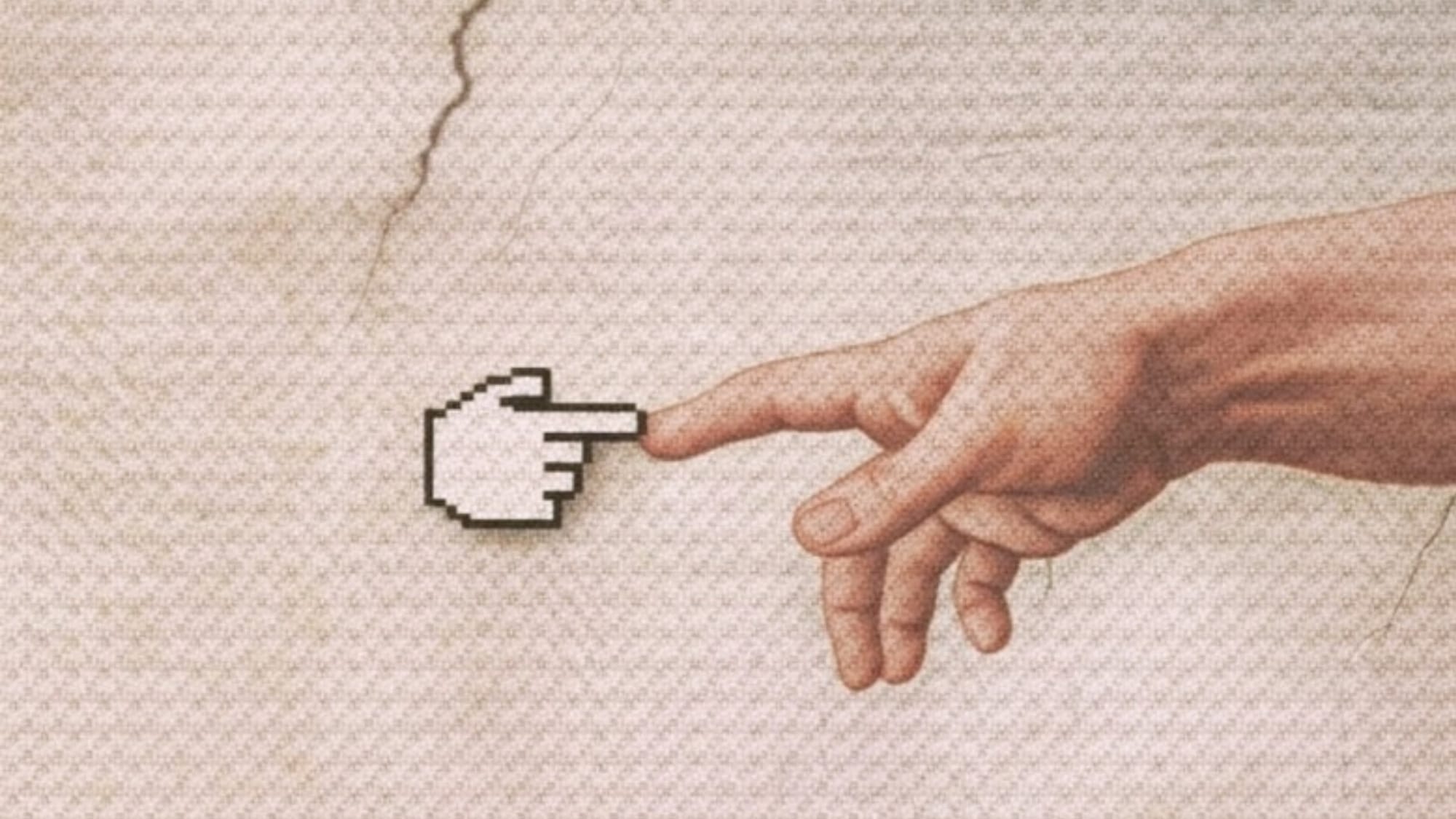
At Monday's WWDC 2026 developer conference, Apple added a feature called Reframe to the Photos app. It shifts the perspective of a finished shot, as if the photographer had moved the camera a little to one side after pressing the shutter. The generative model fills in only the part of the image that the change in perspective uncovers.
Alongside Reframe, Photos gained Extend, which widens the frame and straightens a tilted horizon without cropping important elements, and an improved Cleanup for removing distracting objects with realistic background reconstruction. Apple also reworked Image Playground. The generator now handles photorealistic output, editing with natural language, and selecting individual objects by tapping or circling them. For developers, Apple has opened Image Playground through a new API, so image generation can run inside third-party apps.
A common thread across the whole presentation was natural language as the way of controlling the device. In Messages the app suggests a reply and finds photos from a text description. In Calendar an event is created by describing who it concerns and when. In Shortcuts the user describes the required workflow and the app builds the automation itself.
Competitors deployed generative photo editing directly on the phone earlier. Google introduced Magic Editor at Google I/O in May 2023. The tool can move a subject, fill in the background behind it and remove distracting objects. Samsung introduced Generative Edit on the Galaxy S24 series. Both systems have offered the same kinds of edits for years.
The difference lies in labelling. Samsung places a visible watermark in the lower left corner of generatively edited photos. Google began marking photos edited with the Reimagine generative feature in Magic Editor with an invisible SynthID watermark encoded directly in the pixels, which survives compression and cropping, though it may fail to take hold on very minor edits. Apple said nothing about labelling AI content in Monday's presentation.
Article 50 and labelling of AI images
The European framework targets this directly. Article 50 of the EU AI Act requires, from 2 August 2026, that image content which has been artificially generated or manipulated be disclosed where it is a deepfake. The exception covers artistic, satirical and fictional works. Providers of generative systems must mark the output in a machine-readable format. The technical form is to be specified in the Code of Practice on marking and labelling of AI-generated content, whose second version the European Commission published on 5 March 2026, and the Commission says the final document will come in early June 2026. The impact on individual phone makers will depend on interpretation and enforcement.
iOS 27 and third-party models
Apple has responded to a different European pressure. iOS 27 will allow users to set a third-party model, such as Claude or ChatGPT, as the default assistant. The Next Web describes this step as a concession to competitors and to the requirements of the Digital Markets Act, which had previously led Apple to delay the launch of its AI features in Europe. Apple has not yet announced any labelling of its own AI images.
For brands that build content on mobile editing, this is a practical question. A photo edited generatively on an iPhone and published in the EU is subject to the same labelling obligation as an image generated in Image Playground. If the phone does not label it at source, the burden shifts to whoever publishes the content.
Apple has put generative photo editing into the iPhone. The labelling rule for its output takes effect in the EU in August.




Comments