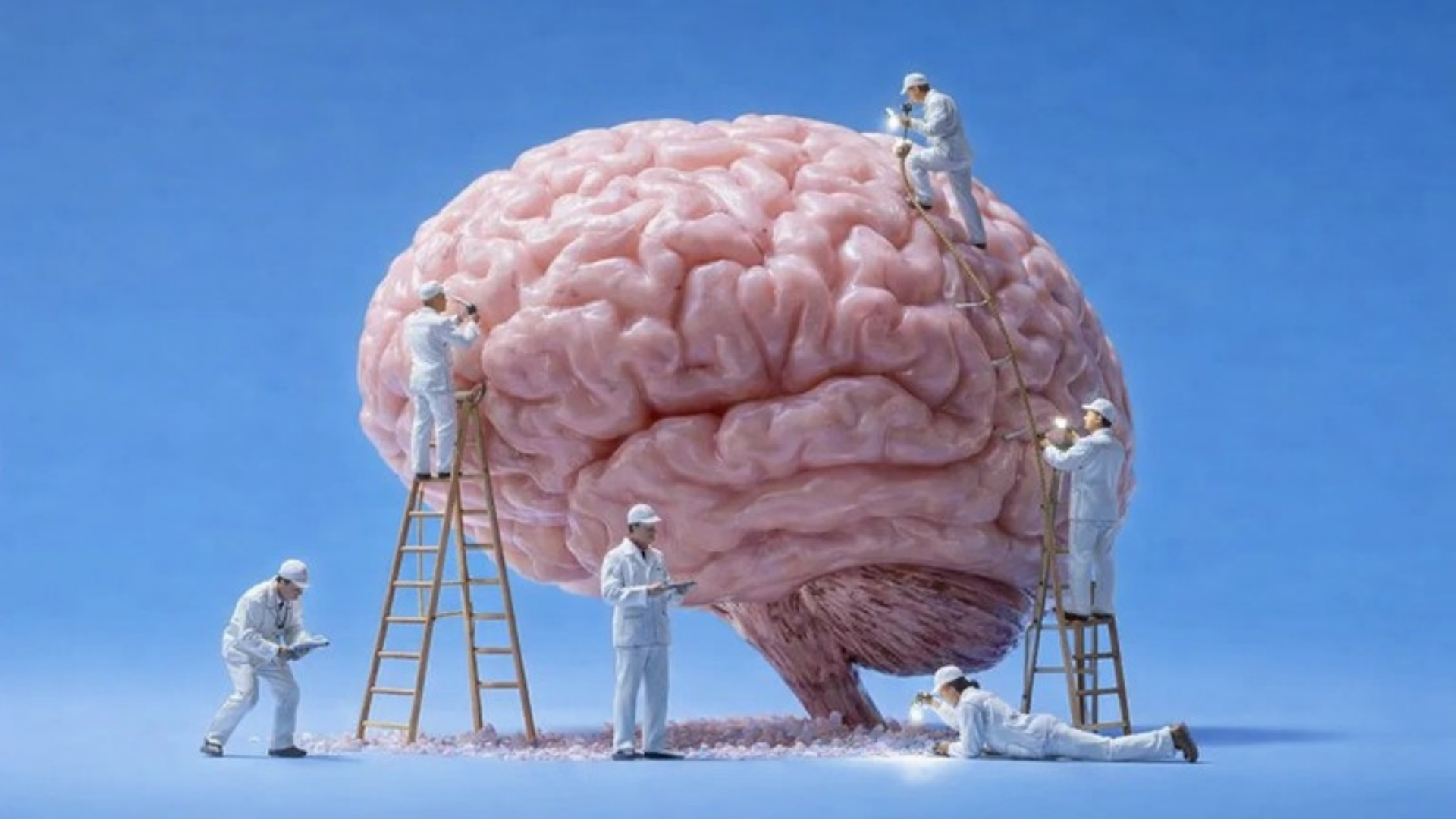
“I just wanted to ask…”, “just a quick question”, “just a phone notification”. In everyday speech the word “just” looks like a trifle. For the brain, however, every interruption is a micro-project that costs time and energy. Research shows that even short questions and unobtrusive notifications place a heavy load on our limited cognitive capacity.
Today’s world is one big attention economy. In 2017 I switched off all notifications and removed all apps from the home screen of my phone. I do not like having the phone on the table. I do not carry it in my pocket. Often I do not know where it is for hours. And my closest people have got used to the fact that getting hold of me is not simply a matter of calling. But “we just wanted to send you a notification” has replaced “I just wanted to ask”. And every now and then I catch myself doing it too. So I want to share with you how expensive our attention is.
Just putting it here
The phone. Our working memory and attention are limited resources. An article on so-called brain drain shows that merely having a mobile phone nearby uses up part of the resources needed to control attention. Our brain has to suppress its automatic attention to the phone. And that costs energy you could have spent, for example, playing with your children. Even a phone lying on the table reduces available working memory and fluid reasoning.
As for notifications, neurologists describe that they activate systems of involuntary attention in the same way as hearing one’s own name. Our brain is naturally set to process such signals immediately. Constant bombardment with notifications “encodes” the brain to expect them. That is why we experience phantom vibrations and feel the need to keep checking the phone.
A phone attracts attention even when it just lies there. A study cited in the review “Phone in the Room, Mind on the Roam” shows that even when we are not using the phone, its presence weakens concentration, worsens performance on tasks requiring attention and slows our reaction times.
“Want a kiss?” “Where are you going for lunch?” “Can I call you?”
These questions seem like nothing at first glance. A trifle. Sometimes they even feel good, giving a sense of importance and interest. But have you ever thought about what they do to you? Psychologists show that every switch to another task has two components: setting up a new mental configuration and overcoming the lingering processes of the previous task. These “switch costs” accumulate and can cost up to 40% of productive time. Even a brief interruption (2.8 seconds) can break the flow of concentration and increase error rates. Studies from the University of California show that after an interruption it takes an average of 23 minutes to return to full concentration.
When we answer a quick question, part of our attention gets stuck in the previous task. Researchers talk about attention residue. Mental resources stay scattered and returning to deep work takes tens of minutes. A corporate study reports that people are interrupted every three minutes and full recovery of concentration takes about 23 minutes. Put simply, we never reach full performance. “Will you have time for me?” These seemingly small questions open a new topic and force us to predict the future. We have to shift our attention, evaluate information, give a socially appropriate answer and sometimes bear responsibility. This exhausts cognitive control.
Excessive phone use and a constant flow of notifications impair memory, reduce the ability to concentrate and worsen decision-making. Meanwhile, for example, 85% of listeners of the DOACEO podcast feel dependent on their phone. Constant multitasking on the phone leads to cognitive overload, which worsens information retention and attention. And the brain gets used to instant rewards. Dopamine spikes from notifications reinforce constant checking of the phone. The average American checks their phone 144 times a day.
What do your statistics say? Combined with digital notifications, our everyday life turns into a series of micro-decisions that lead to decision fatigue. Studies of knowledge workers show that cognitive fatigue appears quickly and degrades performance long before people lose motivation. Our memory, judgement and creativity deteriorate even when we try hard. What, then, is the potential of most people?
What impact does this have on (creative) work?
Loss of deep work. Creative thinking requires continuous blocks of time. Each time a notification pops up or a question arrives, the brain leaves the state of flow. And according to researchers, this also happens when we do not respond to them.
We do not decide quite as well. Chronic switching increases error rates and slows decision-making. And in creative work, a single badly timed ping can ruin an entire concept.
We burn out. Digital overload and cognitive fatigue show up as brain fog, slower thinking, decision paralysis and increased exhaustion. When constant interruption becomes normal, we simply lose enthusiasm.
We feel bad. Turning down “just” questions can trigger a sense of guilt. Being always ready to respond is a systemic problem. It is not up to the individual to cope with an endless stream of questions and decisions. After all, there is something to Steve’s turtleneck and Mark’s black T-shirt.
What can be done?
Set boundaries. Explain to those around you that you respond only at certain times. Say that even short questions have a cost in lost concentration.
Limit notifications. Turn off all non-essential alerts and then also those you consider essential. Do not put your phone on the table next to you. Studies seriously show that the mere presence of a phone drains our cognitive resources.
Decide for yourself. And write longer messages. Instead of several separate texts, send a single summary message or use asynchronous tools (shared documents, shared notes, Jira or Slack, where everyone knows they do not have to reply that day,…).
Set aside longer stretches without interruption. And then give yourself time to reply to the others.
Why am I not taking it from you?
I just wanted to tell you that every short question and notification requires attention. They use up our precious memory resources and leave consequences that slow the return to creative flow. The digital world, moreover, structures our day into an endless series of interruptions that reduce performance, creativity and wellbeing. In 2017 it helped me to be around people who felt the same way. Richard liked to say that nobody should call him even if the place was on fire. That is what the fire brigade is for. And he is not one. And Michelle simply wrote it all down. Perhaps her proctitoneberu and hlavneminevolej will delight you too.




Comments